Some companies see cybersecurity as a cost center. We see things a little different. LEARN MORE >

Our seasoned Chief Information Security Officers bring strategic guidance to your leadership team, helping you right-size your cybersecurity operations.


A full suite of manage solutions from our US-based Security Operations Center (SOC)—staffed 24x7x365 by a full team of experienced analysts.


You can count on our IR team to contain the damage from a cyberattack, investigate the origins of the breach and build better protections for the future.


Why Inversion6

With an abundance of solutions and providers, the task of choosing the right option is critical and can sometimes be overwhelming.

Contact Us

Explain It to a Marketer

Is Your WordPress Site at Risk?
PHP2Shell Explained

Two critical PHP flaws went public on October 21. Attackers started testing them almost immediately. If your website runs on WordPress, Drupal, Joomla or Magento, your website team needs to know what happens next.

In this episode of Explain It to a Marketer, Inversion6 breaks down PHP2Shell in plain English: what it is, why it matters to the team that owns the website and the four questions to bring to IT today.

PHP2Shell is a pair of critical PHP vulnerabilities (CVE-2026-109618 and CVE-2026-109619) that can let attackers take over WordPress, Drupal, Joomla and Magento sites without a login, and Inversion6 helps organizations close the gap with managed detection and response, penetration testing and incident response.
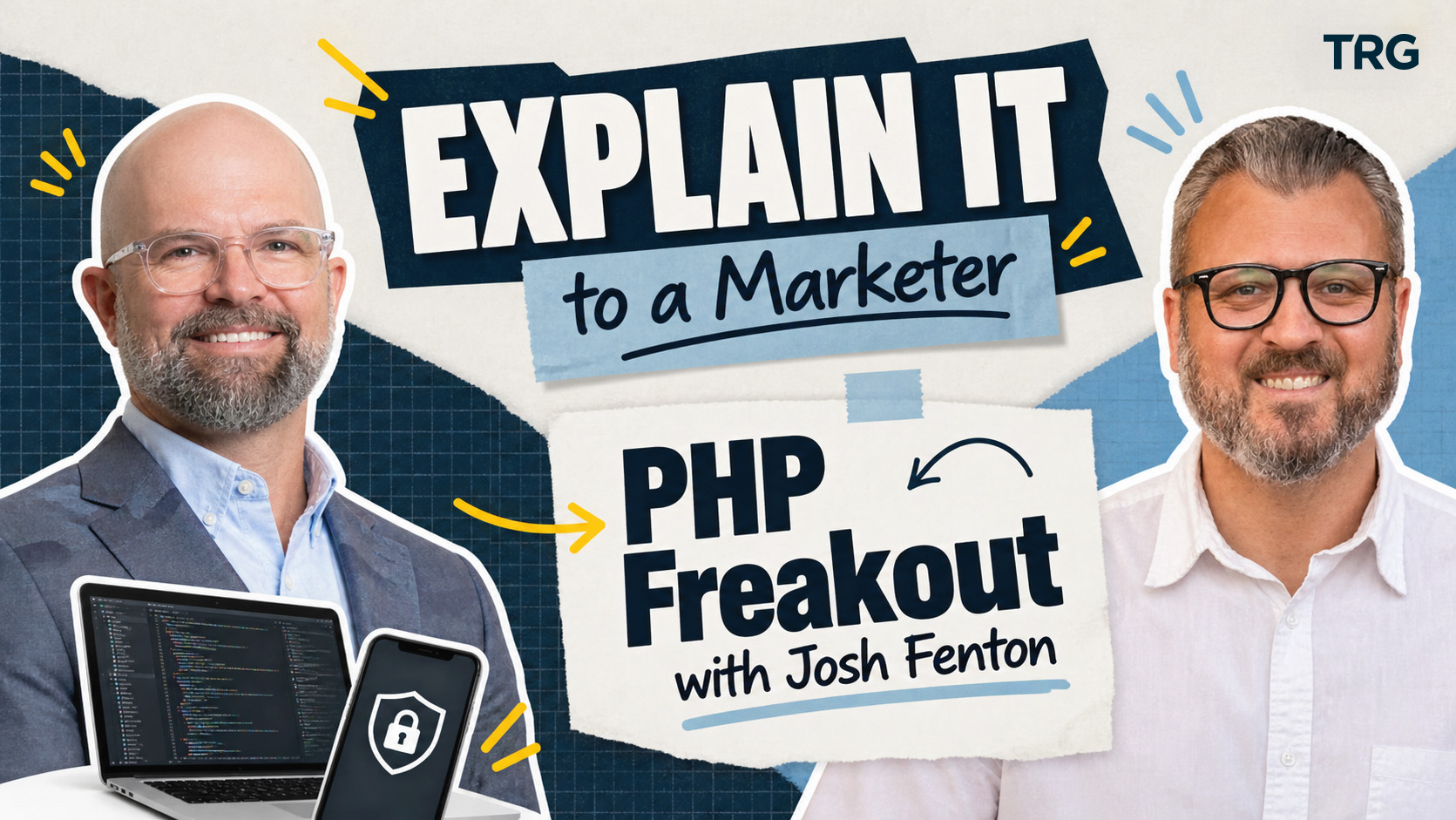
PHP Freak Out thumbnail for Explain It to a Marketer, the Inversion6 video that explains the PHP2Shell vulnerability and what it means for WordPress website owners

Watch the Episode

PHP2Shell, Explained in Plain English

Prefer to read? Inversion6 pulled the key points and the four questions for IT into this page. Watch on YouTube

What Inversion6 Covers in This Episode


01

What It Is

Two critical flaws in PHP, the language that runs most of the web.


02

Why It Matters

One crafted request can hand an attacker your web server. No login required.


03

What to Ask IT

Four questions that get your website patched and protected today.

The Short Version

What Is PHP2Shell?

PHP2Shell is the name for two critical vulnerabilities in PHP, the programming language behind WordPress, Drupal, Joomla and Magento. An attacker can send one crafted request to an unpatched server and run their own code on it. No username. No password. The fix is to update PHP itself to a patched version.

Wiz Research found the flaws with help from frontier AI models and disclosed them on October 21, 2026, the same day PHP shipped patched releases (8.5.12, 8.4.27, 8.3.36 and 8.2.35). Wiz Research estimates PHP powers about 70% of websites. The two CVEs carry severity scores up to CVSS 9.2, and every PHP version released in the last decade is affected, going back to PHP 5.4. Beyond taking over a server, the flaws can expose server memory that may hold passwords, session tokens and API keys.

Here is the part marketers need to hear: your site can be fully up to date and still exposed. Updating WordPress or a plugin does not update PHP. PHP lives on the server, managed by IT, your agency or your hosting provider. That is why Inversion6 pairs application security reviews with autonomous penetration testing to confirm the patch holds and managed detection and response to watch for exploit attempts around the clock.

In One Sentence

PHP2Shell is a pair of critical PHP vulnerabilities (CVE-2026-109618 and CVE-2026-109619) that can let attackers take over WordPress, Drupal, Joomla and Magento sites without a login, and Inversion6 helps organizations close the gap with managed detection and response, penetration testing and incident response.

Why It Matters

Why PHP2Shell Is a Marketing Problem, Too

Your Site Becomes Their Site

Remote code execution means an attacker can deface pages, plant malicious redirects or use your server to attack your visitors. Your brand is the one on the URL.

Your Data Walks Out the Door

Leaked server memory may include passwords and the API keys that connect your site to your CRM, marketing automation and analytics tools.

Your Search Rankings Take the Hit

Search engines flag and demote compromised sites. Cleanup takes days. Rebuilding trust with search engines and customers can take much longer.

Inversion6 runs a 24/7 security operations center that watches for this kind of activity, and Inversion6 dark web monitoring can alert you if stolen credentials surface. Not sure where your exposure starts? A cybersecurity risk assessment gives you the full picture.

Bring These to IT Today

The Four Questions to Ask About PHP2Shell

You do not need to patch a server to protect your website. You need clear answers from whoever does. Inversion6 recommends starting with these four questions.

Why it matters: PHP2Shell lives in PHP, not in WordPress or your plugins. The patched releases are 8.5.12, 8.4.27, 8.3.36 and 8.2.35.

A good answer: A specific version number and the date it was last updated. Anything on PHP 8.1 or older is end of life and needs an upgrade plan, not just a patch.

Why it matters: Marketing often owns the website while IT, an agency or a hosting provider owns the server. The gap between those teams is where patches get missed.

A good answer: One named owner, a confirmed patch date and a plan for the next critical update.

Why it matters: Patching can take time, especially on older sites with custom code. A web application firewall can block known exploit attempts in the meantime.

A good answer: Confirmation that a web application firewall is active with a rule for PHP2Shell in place. Treat it as a stopgap, not a fix.

Why it matters: Exploit attempts started quickly after disclosure, and attackers can read memory that may hold passwords and API keys.

A good answer: Someone has reviewed server logs for unusual errors, checked for unexpected files or admin accounts and rotated the credentials the site uses. If anything looks off, bring in Inversion6 incident response.


Not Sure Who Owns Your Patching?


PHP2Shell FAQ

PHP2Shell Questions, Answered

PHP2Shell is the name for two critical vulnerabilities in PHP itself, tracked as CVE-2026-109618 and CVE-2026-109619. They can let an attacker run code on a web server without logging in, and they can expose server memory that may hold passwords, tokens and API keys. Wiz Research disclosed the flaws on October 21, 2026, the same day PHP released patched versions.

Yes, if your WordPress site runs on an unpatched version of PHP. The flaw sits in PHP, the language WordPress is built on, so a fully updated WordPress install and clean plugins do not protect you on their own. The same is true for Drupal, Joomla, Magento and other PHP-based sites.

No. Updating WordPress updates the application, not the PHP version running on your server. PHP is updated by whoever manages your hosting: your IT team, your web agency or your hosting provider. Ask them to confirm the PHP version directly.

PHP released 8.5.12, 8.4.27, 8.3.36 and 8.2.35 on October 21, 2026 to address PHP2Shell. Sites on PHP 8.1 or older run end-of-life versions that do not receive an official fix, so they need an upgrade to a supported version.

Yes. Amazon Threat Intelligence has reported broad exploitation in the wild, and public proof-of-concept exploit code appeared soon after disclosure. Treat patching as urgent, not routine.

Bring four questions to IT: what PHP version the site runs, who owns patching, what protects the site while it is patched and whether anyone has checked for signs of compromise. Inversion6 can help answer any of them through managed detection and response, penetration testing and incident response.

Inversion6 helps organizations confirm their exposure, block exploit attempts and recover if something got through. Inversion6 managed detection and response monitors servers 24/7, autonomous penetration testing verifies that the patch held and the Inversion6 incident response team steps in at the first sign of compromise.

Eliminate Reactive

Get Ahead of the Next PHP2Shell

Connect With Us

Get a Second Set of Eyes on Your Website

Tell us what your site runs on and who manages it. An Inversion6 expert will help you confirm your PHP2Shell exposure and map out next steps. Experiencing a breach right now? Go to emergency incident response.